Small, nonprofit organizations don’t usually have time or skill sets to develop clear websites to promote their mission and gain volunteers and donations. A simple redesign will help to make the website more understandable with clearer verbiage and better placement of buttons.
My role for this project was the Project Manager


Trello
Zoom
Figma
Miro
G-Suite
March 20th, 2023 - April 6th, 2023
Total duration: 3.5 weeks
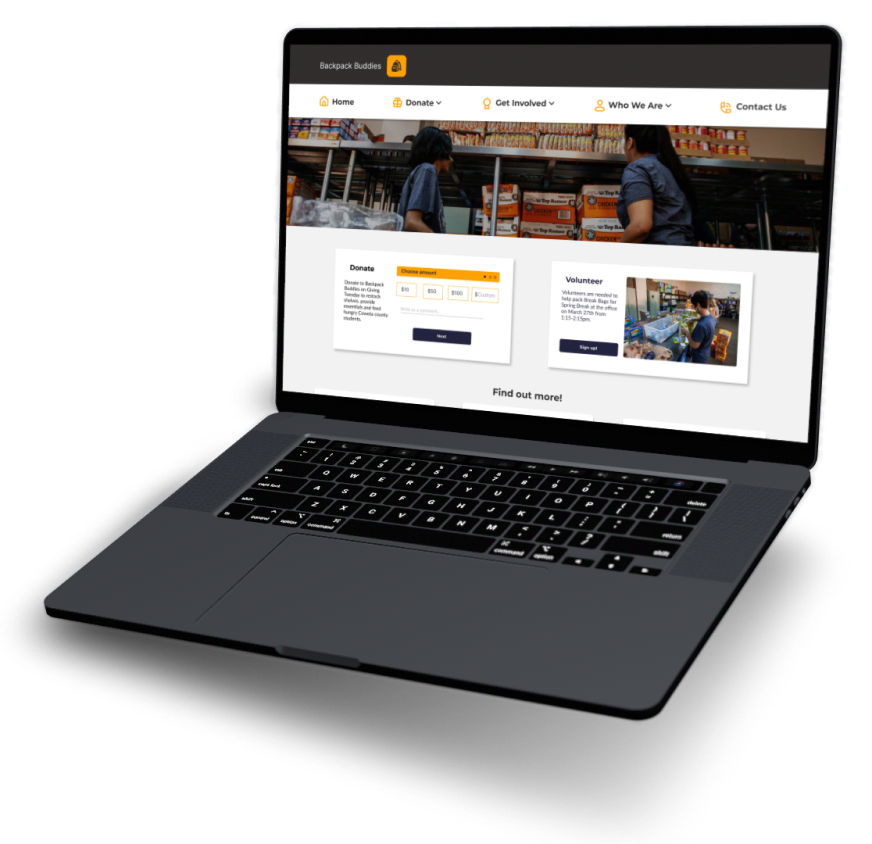
Small, nonprofit organizations don’t usually have time or skill sets to develop clear websites to promote their mission and gain volunteers and donations.
A simple redesign will help to make the website more understandable with clearer verbiage and better placement of buttons.
Users were able to understand the redesign and utilize the site more fluidly.
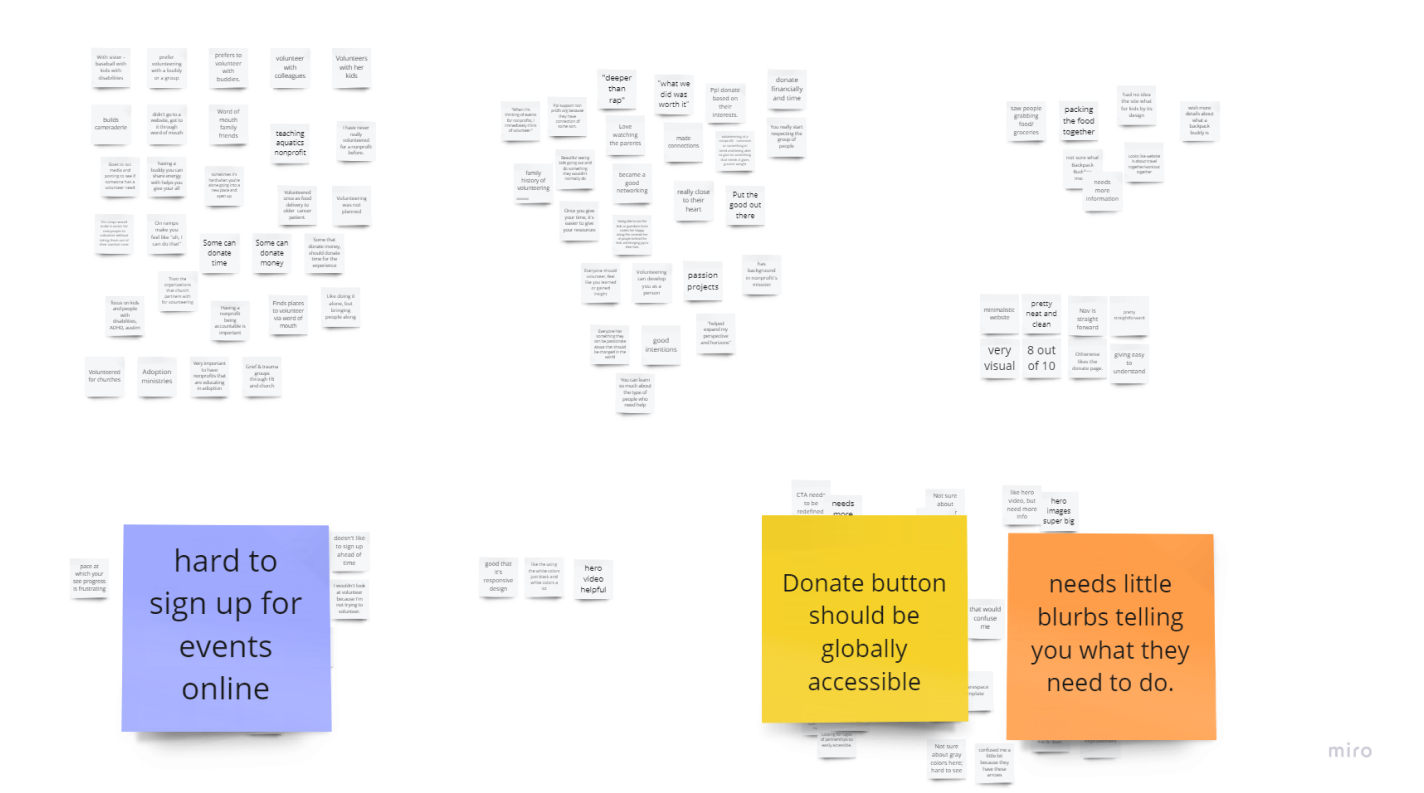
After gathering all the data, we created an affinity diagram to organize the information and identify patterns, including those relevant to Sidney Love. By categorizing the data, we were able to determine the common problems that users like Sidney face on the Backpack Buddies website. This helped us isolate the main points that require our attention.

Volunteer in non profit organization.
Connect with local non profit organization
Help underprivileged children obtain nutrition they need.
Events aren't always listed or are outdated.
Can be unclear on how much time is asked of volunteers.
Non profit websites can be difficult to navigate.
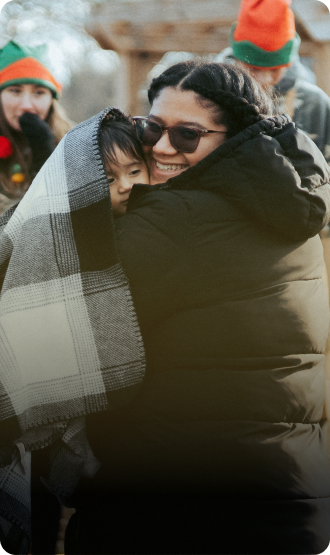
Sidney is a 34-year-old, married, Marketing Manager with a strong passion for community service, particularly in the area of supporting children. She firmly believes that every child deserves a chance to thrive and reach their full potential, regardless of their background or circumstances.
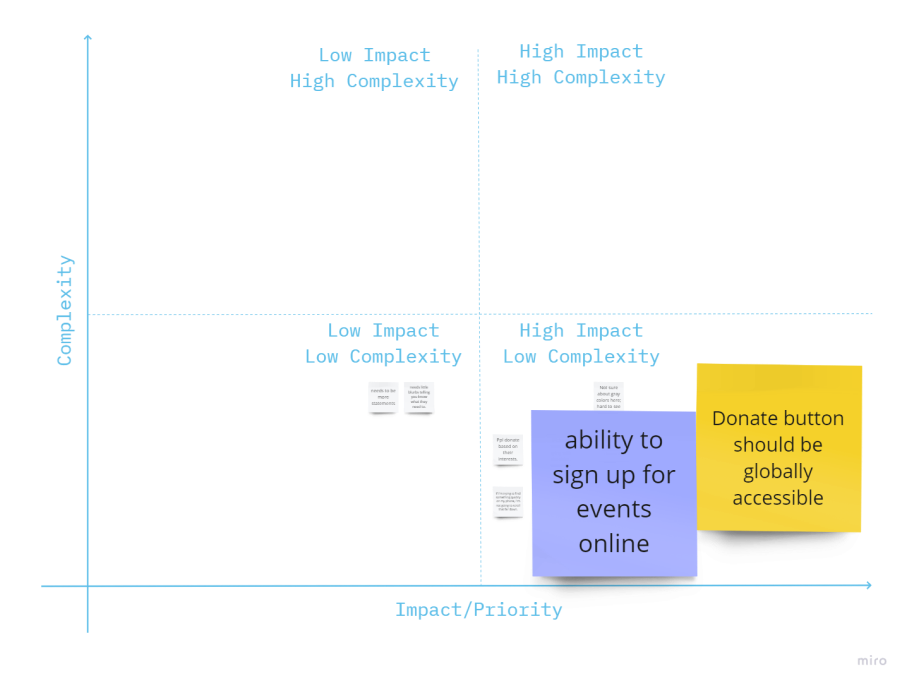
Sidney Love had a difficult time finding ways to help Backpack Buddies on their website. Therefore, we created a Feature Prioritization Matrix to sort through the most important findings from our interviews and determine which features we should work on to assist Sidney.
Defining Sidney's insight and problem helped us identify what she needed from the Backpack Buddies website. These statements helped us focus on Sidney's needs while creating the solutions.
In hopes of putting good into the world and filling the hungry bellies of the children in her community, Sidney Love, wants to connect with a local non-profit, Backpack Buddies.
Sidney Love needs to connect with an organization in order to make sure kids have food on the weekend.
Our group member James wrote a story about Sidney and her experience that led her to visit the Backpack Buddies website.
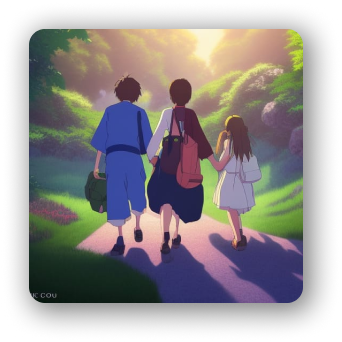
Sidney heard from her 2 kids that a friend of theirs saves his Friday lunches to eat on weekends due to a lack of food at his house.
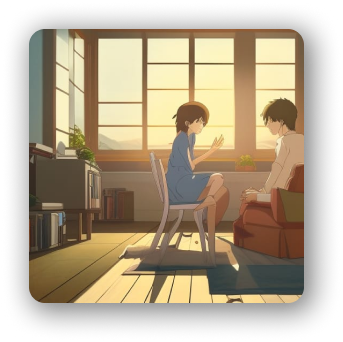
That night, Sidney talked with her husband about the problem and expressed her desire to get involved. However, she didn't know where to start or who could help her.
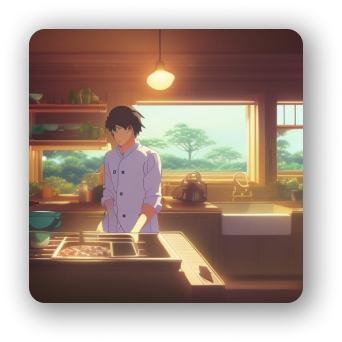
The next morning, Sidney's husband remembered that his company makes donations to a program called Backpack Buddies, which helps address the same issue that these kids were facing.
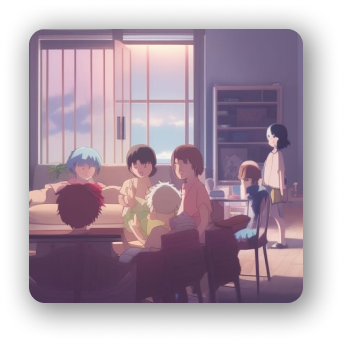
Sidney invited the family over for dinner and introduced them to the Backpack Buddies program.
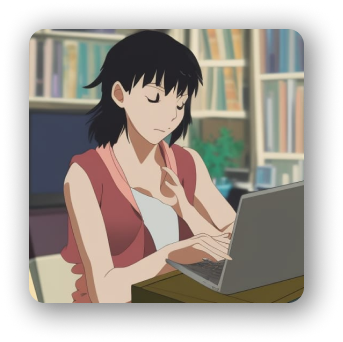
The family friends ended up exploring the option of signing up for the program. Sidney also searched through their website to find volunteering opportunities that fit with her schedule.
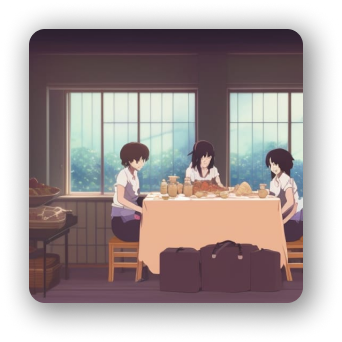
The family friends were able to successfully register for Backpack Buddies, and Sidney was able to volunteer her time while managing her schedule as she had hoped.
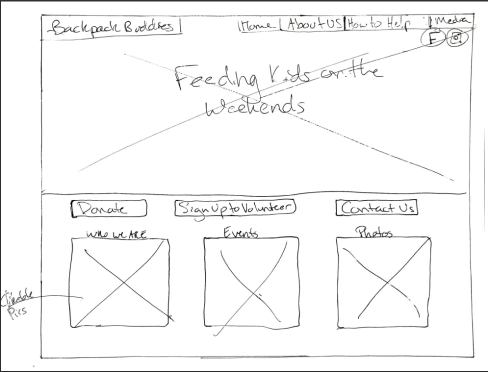
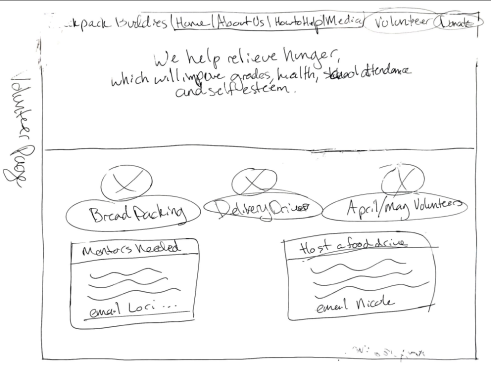
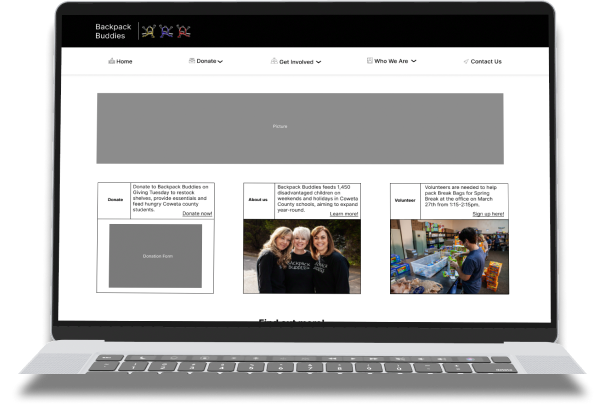
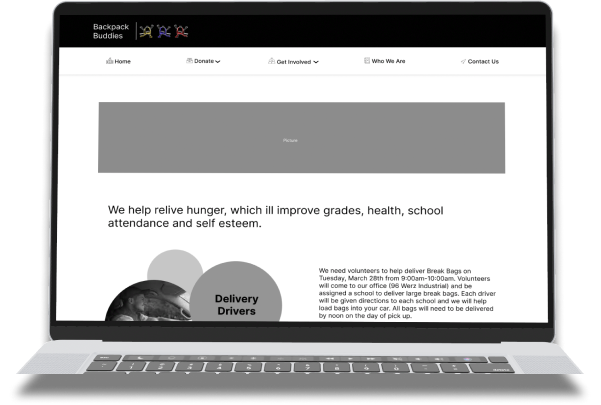
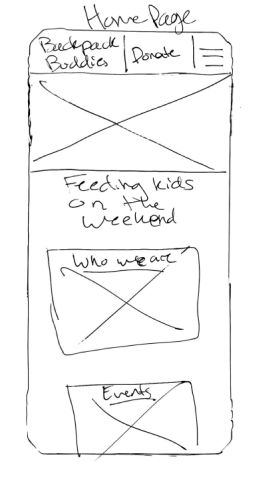
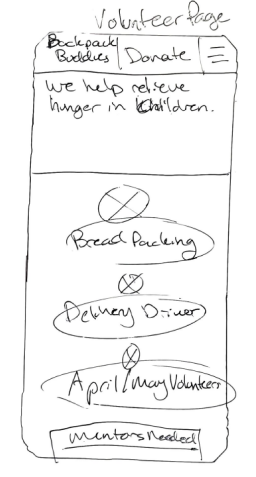
Sketching generated multiple low-fidelity design ideas quickly, allowing us to explore solutions to Sidney's problem.
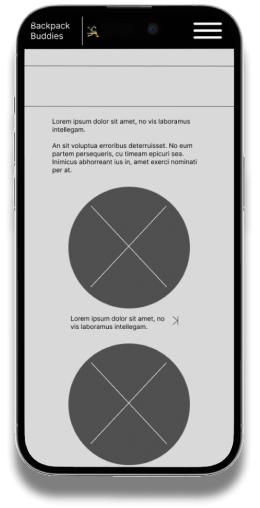
Mid-fidelity wireframes helped us refine the design direction and avoid creating further issues for Sidney in the final product.
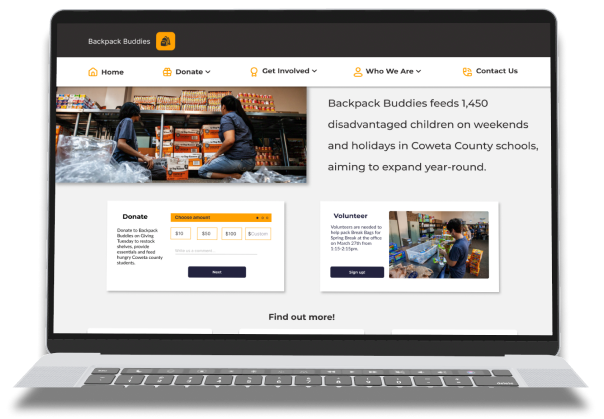
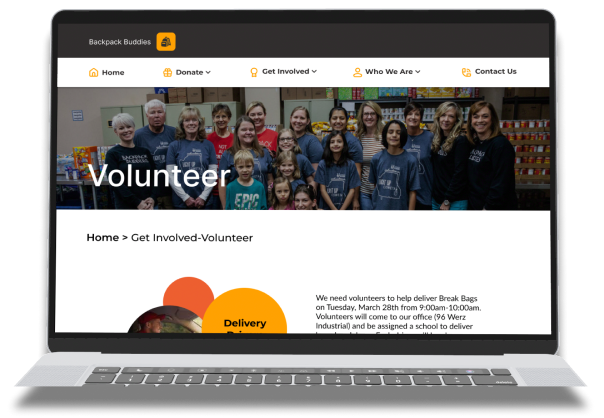
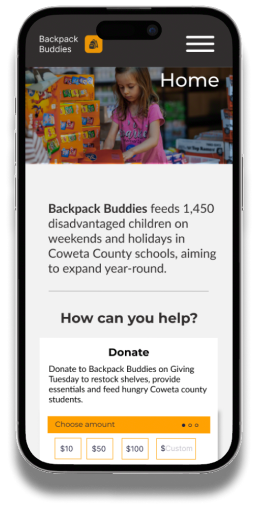
Hi-fidelity wireframes provided a detailed representation of the final product for user testing and feedback before development, enabling us to understand how Sidney would experience the product and whether our design decisions were effective.
These stages helped us create an effective solution for Sidney's problem.

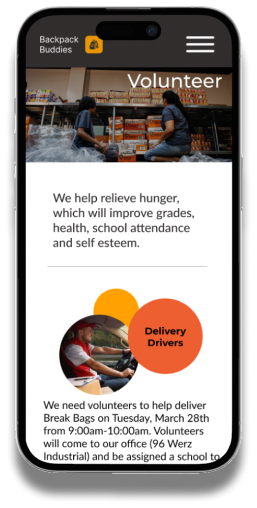
Products will inevitably require next steps and further iterations. For this project, I plan to incorporate more accessibility features into the site, such as:
- The ability to change the size of the text
- The ability to change the font to an easier one to read for dyslexia
- The ability to change the colors to higher contrast
This was an amazing experience and everyone really came together to produce a product that we’re all proud of. Although collaborating presented its challenges, we tackled them head-on by communicating effectively and actively listening to each other, resulting in a cohesive end product.
The experience of organizing this product challenged my perception of project scope. While navigating through various organizational issues, I was fortunate to have the support of my groupmates. Together, we overcame these obstacles and I gained a valuable lesson in viewing project scope from multiple perspectives. This has equipped me with a better understanding of how to effectively organize future projects.